Monday, March 31, 2025

Best Funding Options for Small Businesses: A Complete Guide to Secure the Capital You Need

Introduction

Securing capital is one of the biggest challenges for entrepreneurs and small business owners. Whether you're launching a startup, expanding operations, or covering cash flow gaps, finding the best funding options for small businesses is essential for growth and stability.

This SEO-optimized guide explores the most effective financing methods available today, including pros, cons, qualifications, and how to choose the right one for your business.


Why Small Business Funding Is Important

Running a successful business requires more than just a great idea. You need access to capital to:
✅ Hire staff and cover payroll
✅ Purchase equipment or inventory
✅ Market your business
✅ Expand to new locations
✅ Cover unexpected expenses

Choosing the right funding source helps you manage risk and fuel sustainable growth.


1. SBA Loans (Small Business Administration Loans)

Best for: Established businesses with solid financials looking for low-interest, long-term loans.

✅ Pros:

  • Low interest rates
  • Long repayment terms (up to 25 years)
  • Backed by the government

❌ Cons:

  • Strict qualification requirements
  • Longer approval process

💡 Popular SBA Loan Types:

  • SBA 7(a) Loan – general-purpose financing
  • SBA 504 Loan – for real estate or equipment
  • SBA Microloan – for smaller loan amounts (up to $50,000)

2. Business Lines of Credit

Best for: Managing cash flow, purchasing inventory, or handling emergencies.

✅ Pros:

  • Flexible access to funds
  • Pay interest only on what you use
  • Can reuse funds as you repay

❌ Cons:

  • May have variable interest rates
  • Requires decent credit and business history

💡 Think of it like a credit card—but with higher limits and better terms for businesses.


3. Term Loans

Best for: Large one-time expenses such as equipment purchases or expansion.

✅ Pros:

  • Fixed interest rates and monthly payments
  • Predictable and structured repayment

❌ Cons:

  • May require strong credit
  • Less flexible than a line of credit

💡 Offered by banks, credit unions, and online lenders with terms ranging from 1–10 years.


4. Equipment Financing

Best for: Purchasing vehicles, machinery, or business equipment.

✅ Pros:

  • Equipment serves as collateral
  • Easier to qualify than unsecured loans

❌ Cons:

  • May require a down payment
  • You only get funds for equipment purchases

💡 Great option for restaurants, construction companies, or manufacturers.


5. Invoice Financing (Accounts Receivable Financing)

Best for: Businesses with unpaid customer invoices.

✅ Pros:

  • Quick access to cash
  • Doesn’t require perfect credit

❌ Cons:

  • Fees can be high
  • Short-term solution only

💡 You receive up to 85% of the invoice value upfront, and the rest after payment minus fees.


6. Business Credit Cards

Best for: Everyday expenses and building business credit.

✅ Pros:

  • Easy to apply
  • Rewards, cashback, or travel points
  • Helps separate business and personal expenses

❌ Cons:

  • High interest rates if not paid in full
  • May require a personal guarantee

💡 Use wisely and pay in full each month to avoid costly interest charges.


7. Merchant Cash Advances

Best for: Quick funding based on daily sales (especially for retail and restaurants).

✅ Pros:

  • Fast approval (often within 24–48 hours)
  • No collateral needed

❌ Cons:

  • Very high fees
  • Daily or weekly repayment from future sales

💡 Best as a last resort due to high effective APRs.


8. Crowdfunding

Best for: Product-based businesses or startups with a compelling story.

✅ Pros:

  • Raise money without giving up equity or taking on debt
  • Builds a loyal customer base

❌ Cons:

  • Time-consuming
  • Not guaranteed to reach your goal

💡 Platforms like Kickstarter, Indiegogo, and GoFundMe are popular choices.


9. Peer-to-Peer (P2P) Lending

Best for: Entrepreneurs who don’t qualify for traditional bank loans.

✅ Pros:

  • Online platforms like LendingClub and Funding Circle
  • Easier approval than banks

❌ Cons:

  • Interest rates vary based on credit profile
  • Not available in all states

💡 Ideal for borrowers with good personal credit and a solid business plan.


10. Grants and Free Funding Options

Best for: Small businesses, women-owned, minority-owned, or nonprofit startups.

✅ Pros:

  • Free money—no repayment required
  • May offer mentorship and resources

❌ Cons:

  • Competitive application process
  • Strict eligibility and reporting requirements

💡 Check Grants.gov, SBA grants, local chambers, and private foundations.


How to Choose the Best Funding Option for Your Small Business

✅ Consider These Factors:

  • Loan amount needed
  • How quickly you need funds
  • Your credit score (personal & business)
  • Time in business
  • Monthly revenue
  • Willingness to provide collateral or personal guarantee

📌 Pro Tip: Always compare multiple lenders and funding options before committing. Look beyond interest rates—consider fees, repayment terms, and total cost.

Need Personal Or Business Funding? Prestige Business Financial Services LLC offer over 30 Personal and Business Funding options to include credit repair and passive income programs.

Book A Free Consult And We Can Help - https://prestigebusinessfinancialservices.com

Email - anthony@prestigebfs.com


Final Thoughts: The Right Funding Fuels Growth

With so many options available, the best funding option for your small business depends on your goals, timeline, and financial situation.

✅ Need working capital? Try a line of credit or business credit card.
✅ Purchasing equipment? Equipment financing is perfect.
✅ Launching a startup? Explore crowdfunding or microloans.
✅ Growing fast? Consider SBA loans or term loans.

🎯 Be proactive, understand your needs, and choose the funding solution that aligns with your business goals.

Need Personal Or Business Funding? Prestige Business Financial Services LLC offer over 30 Personal and Business Funding options to include credit repair and passive income programs.

Book A Free Consult And We Can Help - https://prestigebusinessfinancialservices.com

Email - anthony@prestigebfs.com

💬 Need help choosing the right loan? Drop your questions in the comments!


Prestige Business Financial Services LLC

"Your One Stop Shop To All Your Personal And Business Funding Needs"

Website- https://prestigebusinessfinancialservices.com

Email - anthony@prestigebfs.com

Phone- 1-800-622-0453

Saturday, March 29, 2025

How to Build Business Credit Fast: Step-by-Step Guide for Entrepreneurs

Introduction

Whether you’re launching a startup or expanding your company, business credit plays a crucial role in your financial success. A strong business credit profile can help you secure funding, negotiate better terms with vendors, and separate your personal and business finances. But how do you build business credit fast—especially if you're starting from scratch?

In this SEO-optimized, step-by-step guide, you’ll learn exactly how to build business credit fast so you can establish financial credibility and unlock new growth opportunities.


What Is Business Credit and Why Does It Matter?

Business credit is a score or profile that lenders, vendors, and creditors use to determine how financially trustworthy your business is. It works similarly to personal credit, but it’s tied to your Employer Identification Number (EIN), not your Social Security Number (SSN).

✅ Benefits of Strong Business Credit:

  • Easier approval for loans and credit lines
  • Higher credit limits and lower interest rates
  • Better terms with suppliers and vendors
  • Protects your personal credit and assets
  • Essential for scaling and long-term growth

Step-by-Step Guide: How to Build Business Credit Fast

Step 1: Legally Establish Your Business

Before you can build business credit, you need to form a legitimate business entity.

✔️ Choose a legal structure (LLC or Corporation recommended)
✔️ Register your business with your state
✔️ Get an Employer Identification Number (EIN) from the IRS
✔️ Open a business bank account

💡 Why It Matters: This separates your personal and business finances—critical for building credit.


Step 2: Get Listed with the Business Credit Bureaus

To build business credit, you must exist in the eyes of the credit bureaus.

Register with Dun & Bradstreet and get your D-U-N-S Number (free at DNB.com)
✅ Also consider monitoring your profile with:

  • Experian Business
  • Equifax Business

💡 Vendors and lenders report activity to these bureaus, helping you build your score.


Step 3: Open a Business Bank Account

A dedicated business checking account helps establish financial stability and is often a requirement for business loans and credit lines.

✔️ Use this account exclusively for business income and expenses
✔️ Keep it active with regular deposits and transactions

💡 Pro Tip: Banks often offer new account bonuses or credit-building opportunities—shop around.


Step 4: Apply for Net-30 Vendor Accounts That Report to Bureaus

Net-30 vendors allow you to buy now and pay in 30 days—building your credit as you pay on time.

Top starter vendors that report include:

  • Uline (shipping & office supplies)
  • Quill (office products)
  • Grainger (industrial supplies)
  • Summa Office Supplies

✅ Make small purchases
✅ Pay invoices before the due date
✅ These positive payments help build your Paydex score quickly


Step 5: Get a Business Credit Card

A business credit card helps build credit history while offering rewards and flexibility.

✔️ Choose a card that reports to business credit bureaus
✔️ Use it for regular purchases (ads, office supplies, fuel, etc.)
✔️ Pay in full and on time every month

💡 Recommended beginner cards:

  • Capital One Spark Classic for Business
  • Chase Ink Business Credit Card
  • American Express Blue Business Cash Card

Step 6: Establish Trade Lines with Suppliers and Vendors

As you work with more vendors, ask if they offer credit terms (Net-30, Net-60, etc.) and report to bureaus.

✅ Always make payments early or on time
✅ The more accounts in good standing, the faster your business credit grows


Step 7: Monitor Your Business Credit Reports Regularly

Just like personal credit, it’s important to monitor your business credit for accuracy.

🔍 Check reports with:

  • Nav (free business credit monitoring)
  • Dun & Bradstreet CreditSignal
  • Experian Business Credit Advantage

💡 Dispute any errors or outdated information that could hurt your score.


Step 8: Apply for a Business Line of Credit or Loan

Once your business has established some credit history (usually after 3–6 months), you can qualify for small business funding.

Options include:

  • Business lines of credit
  • Working capital loans
  • SBA Microloans
  • Online lenders (e.g., Fundbox, BlueVine)

✅ Even if you don’t need the funds right away, being approved helps build your credit profile.


Pro Tips to Build Business Credit Even Faster

🚀 Pay early – Not just on time; paying early can boost your Paydex score faster
🚀 Keep credit utilization low – Aim for under 30% usage on credit cards
🚀 Avoid personal guarantees when possible – Focus on building business credit
🚀 Use your EIN, not your SSN, when applying for business accounts
🚀 Build relationships with lenders and vendors – It can open new credit doors


How Long Does It Take to Build Business Credit?

With the right strategy, you can start seeing business credit activity in 30–90 days. A solid credit profile usually takes 6–12 months, but you can speed up the process by:

  • Opening multiple vendor accounts
  • Paying early and consistently
  • Applying for tiered credit (Net-30 → Credit Cards → Loans)

Need To Build Your Business Credit Paydex 80? Need A Personal or Business Loan? Need Debt Consolidation or Credit Repair? We can help. We Offer over 30 Personal and Business Funding Options. Programs for Good and Bad Credit.

Book A Free Consult - https://prestigebusinessfinancialservices.com

Email us- anthony@prestigebfs.com


Final Thoughts: Build Business Credit the Smart Way

Establishing strong business credit is one of the smartest moves you can make as an entrepreneur. It opens doors to funding, partnerships, and long-term success.

By following this step-by-step guide, you can:
✅ Build business credit fast
✅ Separate your personal and business finances
✅ Unlock better financing options and vendor relationships

🎯 Start building today—your business’s financial future depends on it.

Need To Build Your Business Credit Paydex 80? Need A Personal or Business Loan? Need Debt Consolidation or Credit Repair? We can help. We Offer over 30 Personal and Business Funding Options. Programs for Good and Bad Credit.

Book A Free Consult - https://prestigebusinessfinancialservices.com

Email us- anthony@prestigebfs.com

💬 Have a question about business credit? Drop it in the comments below!


Prestige Business Financial Services LLC
"Your One Shop Stop To All Your Personal And Business Funding Needs"

Website- https://prestigebusinessfinancialservices.com

Email - anthony@prestigebfs.com

Phone- 1-800-622-0453

Friday, March 28, 2025

Impact of Tariffs on Consumer Goods: Exploring How Tariffs Influence the Prices of Everyday Products and Consumer Behavior

Introduction

In recent years, tariffs have become a central topic in global trade and economics. But beyond headlines and politics, they have a real and tangible impact on consumers' wallets. From electronics and clothing to groceries and vehicles, tariffs influence the prices of everyday products, and understanding their effects is essential for both consumers and businesses.

In this SEO-optimized article, we’ll explore:
✅ What tariffs are and how they work
✅ The direct and indirect impact of tariffs on consumer goods
✅ How rising prices influence consumer behavior
✅ Strategies businesses and consumers use to cope with tariffs

Let’s dive into the impact of tariffs on consumer goods and how they shape your daily spending decisions.


What Are Tariffs and How Do They Work?

A tariff is a tax imposed by a government on imported goods. The primary purposes of tariffs are to:

  • Protect domestic industries
  • Generate revenue
  • Influence foreign trade policy

📌 How it works: When a tariff is added to an imported product, the cost of bringing that item into the country increases. Importers often pass this cost on to consumers through higher retail prices.

🔍 Example:

If a $500 washing machine imported from Country A faces a 25% tariff, the importer pays an extra $125 in tariffs. The final price may now be $625 or more for the consumer.


How Tariffs Affect the Prices of Everyday Consumer Goods

Tariffs often lead to higher prices for both imported goods and domestic alternatives. Here’s how:

📈 1. Increased Production Costs

Many manufacturers rely on imported components. Tariffs on raw materials (e.g., steel, aluminum, microchips) increase production costs, which are then passed on to consumers.

🛍️ 2. Higher Retail Prices

Tariffs on finished goods (like clothing, electronics, or appliances) directly raise retail prices.

🧾 3. Reduced Product Variety

Some retailers may stop selling certain products that become too expensive or unprofitable, limiting consumer choices.

📦 4. Slower Innovation

Higher costs and market uncertainty can reduce investments in product development, delaying new releases and innovations.


Examples of Tariffs Affecting Everyday Products

Here are some real-world examples of how tariffs have impacted common consumer goods:

ProductTariff Impact
Washing machinesPrices rose by over 15% after 2018 tariffs
Steel/AluminumIncreased construction & auto manufacturing costs
Smartphones & LaptopsTariff threats caused price volatility
Groceries (e.g., cheese, wine)Prices increased due to retaliatory tariffs
Furniture & ToysCosts surged, especially for imports from China

💡 According to a study by the Federal Reserve, tariffs implemented between 2018–2019 increased annual household costs by an average of $831.


How Tariffs Influence Consumer Behavior

💰 1. Reduced Spending on Affected Goods

Consumers often cut back or delay purchases of goods with rising prices, especially big-ticket items like appliances or electronics.

🛒 2. Shift to Domestic or Alternative Brands

Buyers may switch to domestic or non-tariffed imports to find better value.

🧠 3. Increased Price Sensitivity

Consumers become more cautious, comparing prices and seeking discounts more aggressively.

📦 4. Change in Shopping Habits

People may buy in bulk, use coupons, or wait for sales to combat rising costs.


Impact of Tariffs on Businesses and Supply Chains

Tariffs don’t just affect consumers—they also disrupt the businesses that supply them.

🏭 1. Supply Chain Disruptions

Manufacturers may need to redesign supply chains, find new suppliers, or absorb costs.

💼 2. Increased Operating Costs

Higher input costs can squeeze profit margins, especially for small businesses.

📉 3. Reduced Competitiveness

Companies facing higher costs may struggle to compete globally.

🔁 4. Price Volatility

Ongoing trade tensions cause uncertainty, making it hard to plan pricing or inventory.


Strategies to Minimize Tariff Impact

For Consumers:

✅ Compare prices across brands and retailers
✅ Use cash-back tools, loyalty programs, and coupons
✅ Buy in bulk when prices are lower
✅ Consider refurbished or second-hand items
✅ Look for domestic alternatives

For Businesses:

✅ Re-evaluate supply chains and sourcing strategies
✅ Negotiate better deals with suppliers
✅ Educate consumers on product value and origin
✅ Adjust pricing and packaging to maintain margins
✅ Consider automation or local manufacturing to reduce dependency


Are Tariffs Always Bad for Consumers?

Not necessarily. While tariffs often increase prices, they can also:
✔️ Protect local jobs and industries
✔️ Encourage domestic production
✔️ Balance trade deficits in some cases

However, in the short term, consumers are more likely to experience price increases and limited choices, especially in sectors heavily reliant on imports.

Need Help? Need A Personal or Business Loan? Need Debt Consolidation or Credit Repair? We can help. We Offer over 30 Personal and Business Funding Options. Programs for Good and Bad Credit.

Book A Free Consult - https://prestigebusinessfinancialservices.com

Email us- anthony@prestigebfs.com


Final Thoughts: Understanding the Real-World Impact of Tariffs

Tariffs are more than just policy tools—they have a direct impact on your everyday life. By understanding how they affect the cost of consumer goods, you can:

✅ Make smarter buying decisions
✅ Adjust your spending habits
✅ Support brands and businesses that offer better value

🎯 Stay informed, plan ahead, and shop smart—because even small changes in trade policy can lead to big changes at the checkout counter.

Need Help? Need A Personal or Business Loan? Need Debt Consolidation or Credit Repair? We can help. We Offer over 30 Personal and Business Funding Options. Programs for Good and Bad Credit.

Book A Free Consult - https://prestigebusinessfinancialservices.com

Email us- anthony@prestigebfs.com

💬 Have you noticed higher prices due to tariffs? Share your experience in the comments below!


Prestige Business Financial Services LLC
"Your One Shop Stop To All Your Personal And Business Funding Needs"

Website- https://prestigebusinessfinancialservices.com

Email - anthony@prestigebfs.com

Phone- 1-800-622-0453

Thursday, March 27, 2025

Mortgage and Homeownership Guidance: Advice on Securing Mortgages and the Financial Implications of Homeownership


Introduction

Buying a home is one of the most significant financial decisions you'll ever make. Whether you’re a first-time buyer or planning your next move, understanding how to secure a mortgage and manage the financial responsibilities of homeownership is crucial. This comprehensive, SEO-optimized guide offers actionable mortgage and homeownership guidance to help you navigate the process with confidence.

In this guide, you’ll learn:
✅ How to prepare for a mortgage
✅ Types of home loans and which one is best for you
✅ Tips for getting approved
✅ The true costs of homeownership
✅ Financial planning for long-term success as a homeowner


What Is a Mortgage and How Does It Work?

A mortgage is a loan from a bank or lender that helps you finance the purchase of a home. You’ll repay the mortgage over a period—typically 15, 20, or 30 years—with interest.

📌 Key Mortgage Terms:

  • Principal: The amount you borrow
  • Interest: The cost of borrowing money
  • Term: The length of the loan (e.g., 30 years)
  • Down payment: The upfront payment you make (usually 3%–20%)
  • Escrow: Funds held to pay taxes and insurance

💡 A lower interest rate = lower monthly payments and less paid over the life of the loan.


How to Prepare for a Mortgage

✅ 1. Check and Improve Your Credit Score

Lenders look at your credit score to assess risk.

  • Good score = better interest rate
  • Aim for 680+, though FHA loans may accept lower scores
  • Pay down debts, avoid late payments, and limit new credit inquiries

✅ 2. Calculate How Much House You Can Afford

Use the 28/36 rule:

  • Spend no more than 28% of your gross monthly income on housing
  • Total debts should be no more than 36% of income

📌 Example: If you earn $6,000/month, your mortgage payment should not exceed $1,680.

✅ 3. Save for a Down Payment

Typical down payment amounts:

  • Conventional loan: 5%–20%
  • FHA loan: 3.5%
  • VA/USDA loans: 0% (for qualified borrowers)

💡 Don’t forget to budget for closing costs (2%–5% of home price).


Types of Home Loans (Which Mortgage is Right for You?)

🏡 1. Conventional Loan

  • Not backed by the government
  • Requires higher credit score
  • Best for buyers with solid financial profiles

🏡 2. FHA Loan

  • Backed by the Federal Housing Administration
  • Low down payment (3.5%)
  • Easier approval with lower credit scores

🏡 3. VA Loan

  • For veterans and active-duty military
  • 0% down payment
  • No private mortgage insurance (PMI)

🏡 4. USDA Loan

  • For rural and some suburban areas
  • 0% down for qualified buyers
  • Income limits apply

🏡 5. Jumbo Loan

  • For homes that exceed conforming loan limits ($766,550 in most areas for 2024)
  • Stricter credit and income requirements

Steps to Get Approved for a Mortgage

  1. Get Preapproved
    • Submit income, credit, and employment info
    • Shows sellers you’re serious
  2. Shop Around for Lenders
    • Compare interest rates, fees, and loan terms
    • Don’t just go with your bank—explore credit unions and online lenders
  3. Submit a Full Application
    • Provide documents: pay stubs, tax returns, bank statements
  4. Loan Processing and Underwriting
    • Lender verifies all details, assesses risk, and approves final amount
  5. Close the Loan
    • Sign documents and pay closing costs
    • Get the keys to your new home!

Financial Implications of Homeownership

Owning a home is more than just paying a mortgage. Be prepared for ongoing costs and responsibilities.

💸 Monthly Costs:

  • Mortgage principal + interest
  • Property taxes
  • Homeowners insurance
  • Private mortgage insurance (PMI) if down payment <20%
  • HOA fees (if applicable)

🛠️ Maintenance and Repairs:

  • Budget 1%–3% of home value annually for maintenance
  • Unexpected issues like plumbing, roofing, or HVAC repairs

📈 Property Value Fluctuation:

  • Home equity grows over time
  • Market downturns can affect your home’s value

💡 Tip: Build an emergency fund to handle unexpected home-related costs.


Pros and Cons of Homeownership

✅ Pros:

  • Builds equity and long-term wealth
  • Stable monthly payments (with a fixed-rate mortgage)
  • Potential tax benefits (mortgage interest & property tax deductions)
  • Pride of ownership and personal freedom

❌ Cons:

  • Large upfront costs (down payment, closing fees)
  • Ongoing maintenance and repair expenses
  • Less flexibility to move quickly
  • Property taxes and insurance can increase

Tips for First-Time Homebuyers

  • Get preapproved before house hunting
  • Stick to your budget—even if you qualify for more
  • Consider a home inspection a must-have
  • Don’t forget about closing costs and moving expenses
  • Research local grants or down payment assistance programs

💡 Bonus Tip: Look into first-time buyer programs in your state for potential perks like tax credits or 0% loans.

Need Help? Need A Personal or Business Loan? Need Debt Consolidation or Credit Repair? We can help. We Offer over 30 Personal and Business Funding Options. Programs for Good and Bad Credit.

Book A Free Consult - https://prestigebusinessfinancialservices.com

Email us- anthony@prestigebfs.com


Final Thoughts: Make Smart Moves with Mortgage and Homeownership Planning

Buying a home is a huge milestone, but it comes with significant financial responsibility. With the right planning and mortgage guidance, you can:

✅ Secure the best loan for your needs
✅ Understand the long-term costs of homeownership
✅ Build wealth through real estate
✅ Enjoy the pride and stability of owning your own home

🎯 Ready to take the next step? Start by checking your credit and speaking with a trusted mortgage advisor.

Need Help? Need A Personal or Business Loan? Need Debt Consolidation or Credit Repair? We can help. We Offer over 30 Personal and Business Funding Options. Programs for Good and Bad Credit.

Book A Free Consult - https://prestigebusinessfinancialservices.com

Email us- anthony@prestigebfs.com

💬 Have a question about mortgages or your first home? Drop it in the comments below!


Prestige Business Financial Services LLC
"Your One Shop Stop To All Your Personal And Business Funding Needs"

Website- https://prestigebusinessfinancialservices.com

Email - anthony@prestigebfs.com

Phone- 1-800-622-0453

Wednesday, March 26, 2025

Insurance Planning: Understanding Different Types of Insurance and Determining Appropriate Coverage


Introduction

Insurance is one of the most important tools in a solid financial plan—but it’s often overlooked or misunderstood. Whether you're protecting your family, business, health, or income, having the right insurance coverage can safeguard you from unexpected losses and provide peace of mind.

In this SEO-optimized guide to insurance planning, you’ll learn:
✅ The different types of insurance you should consider
✅ How to determine the right level of coverage
✅ Tips for choosing insurance policies that fit your goals and budget

Let’s break down insurance planning so you can protect what matters most.


What Is Insurance Planning and Why Is It Important?

Insurance planning is the process of identifying financial risks in your life or business and selecting the right types of insurance coverage to protect against those risks. A good insurance plan ensures that you’re not financially devastated by unexpected events like accidents, illness, natural disasters, or lawsuits.

📌 Key Benefits of Insurance Planning:

  • Financial security for you and your loved ones
  • Asset protection for your home, car, business, or investments
  • Peace of mind knowing you’re covered for life’s uncertainties
  • Legal compliance (e.g., auto, health, business insurance)

💡 Whether you’re a young adult just starting out or planning for retirement, insurance should evolve with your life stage.


Types of Insurance You Should Know

🏥 1. Health Insurance

Purpose: Covers medical expenses from illness, injury, or preventive care.

Key Considerations:

  • Monthly premiums, deductibles, and copays
  • Network of doctors/hospitals
  • Prescription drug coverage
  • Out-of-pocket maximums

💡 Tip: Compare plans on the Health Insurance Marketplace or get employer-sponsored options.


🚗 2. Auto Insurance

Purpose: Covers vehicle damage, theft, and liability in case of an accident.

Required in most states. Common coverage includes:

  • Liability (bodily injury and property damage)
  • Collision (repairs to your car)
  • Comprehensive (non-collision damages like theft or fire)
  • Uninsured/underinsured motorist protection

💡 Tip: Choose higher deductibles to reduce monthly premiums—just be sure you can cover them in an emergency.


🏠 3. Homeowners or Renters Insurance

Purpose: Protects your home, belongings, and liability in case of damage, theft, or lawsuits.

Homeowners Insurance Covers:

  • Dwelling (structure)
  • Personal property (contents)
  • Liability protection
  • Additional living expenses (temporary housing)

Renters Insurance Covers:

  • Personal belongings
  • Liability
  • Loss of use

💡 Tip: Make a digital inventory of your belongings to simplify future claims.


🧬 4. Life Insurance

Purpose: Provides financial protection for your dependents in case you pass away.

Two Main Types:

  • Term Life Insurance – Affordable, covers a set term (e.g., 20 years)
  • Whole Life/Universal Life – Lifetime coverage with a cash value component

💡 Tip: A general rule is to have 10x–12x your annual income in life insurance if you have dependents.


💼 5. Disability Insurance

Purpose: Replaces part of your income if you’re unable to work due to illness or injury.

Types:

  • Short-term disability (coverage for up to 6 months)
  • Long-term disability (coverage that can last years or until retirement)

💡 Tip: Your earning power is your most valuable asset—protect it.


🏢 6. Business Insurance

Purpose: Protects your business from legal claims, property damage, employee-related risks, and more.

Common Policies Include:

  • General liability insurance
  • Commercial property insurance
  • Workers’ compensation
  • Professional liability (errors & omissions)

💡 Tip: Consider business interruption insurance to cover income loss during unexpected closures.


🌍 7. Travel Insurance

Purpose: Covers trip cancellations, medical emergencies abroad, lost baggage, and travel delays.

💡 Tip: Especially valuable for international travelers or expensive, non-refundable trips.


How to Determine the Right Insurance Coverage

✅ 1. Assess Your Needs

  • Are you protecting your family, income, property, or business?
  • What risks are most relevant to your lifestyle or profession?

✅ 2. Evaluate Your Budget

  • What can you comfortably afford in premiums vs. out-of-pocket costs?
  • Don’t over-insure—match coverage to need.

✅ 3. Understand Policy Terms

  • Know the difference between deductibles, copays, coinsurance, and exclusions
  • Pay attention to coverage limits and waiting periods

✅ 4. Review Regularly

  • Update your policies during major life changes (marriage, kids, home purchase, business launch)
  • Shop around annually for better rates or added benefits

Insurance Planning Tips for Every Stage of Life

👩‍🎓 Young Adults (18–30)

  • Start with health, renters, and auto insurance
  • Consider term life if you have debt or dependents
  • Use employer benefits if available

👨‍👩‍👧‍👦 Families (30–50)

  • Add life and disability insurance
  • Increase home coverage as assets grow
  • Look into umbrella insurance for extra liability protection

👴 Retirement (50+)

  • Evaluate long-term care insurance
  • Reassess life insurance needs
  • Review Medicare options for healthcare

Common Insurance Mistakes to Avoid

🚫 Underinsuring or skipping coverage to save money
🚫 Not reading the fine print of policies
🚫 Overlapping policies that waste money
🚫 Forgetting to update beneficiaries or coverage amounts

💡 Remember: The goal is to be protected, not overprotected.

Need Help? Need a Personal or Business Loan? We offer over 30 Personal and Business Funding Options to include credit repair, tradelines, and passive income programs.

Book a Free Consult- https://prestigebusinessfinancialservices.com

Email - anthony@prestigebfs.com


Final Thoughts: Insurance Planning is a Smart Financial Move

Having the right insurance can mean the difference between financial stability and financial disaster. By understanding your risks, choosing the right coverage, and reviewing regularly, you can build a personalized insurance plan that works for you.

✅ Protect your health, income, assets, and loved ones
✅ Save money by optimizing your coverage
✅ Gain peace of mind with the right risk protection

🎯 Start your insurance planning today—and future-proof your financial security.

Need Help? Need a Personal or Business Loan? We offer over 30 Personal and Business Funding Options to include credit repair, tradelines, and passive income programs.

Book a Free Consult- https://prestigebusinessfinancialservices.com

Email - anthony@prestigebfs.com

💬 What’s your must-have insurance policy? Share your thoughts in the comments below!


Prestige Business Financial Services LLC

"Your One Stop Shop To All Your Personal And Business Funding Needs"

Website- https://prestigebusinessfinancialservices.com

Email -anthony@prestigebfs.com

Phone- 1-800-622-0453

Tuesday, March 25, 2025

Tax Planning and Optimization: Tips on Effective Tax Planning to Maximize Deductions and Credits

Introduction

Want to keep more of your hard-earned money? Then tax planning and optimization should be a key part of your financial strategy. Most people wait until tax season to think about their taxes—but smart taxpayers know that year-round planning is how you maximize deductions, reduce tax liability, and even increase your refund.

In this SEO-optimized guide, we’ll explore:
✅ What tax planning is and why it matters
✅ Tips to reduce your taxable income
✅ Deductions and credits you shouldn’t miss
✅ Strategies to optimize taxes for individuals and small businesses
✅ Tools to help with year-round tax planning

Let’s dive into effective tax planning techniques to help you save more and stress less.


What Is Tax Planning and Why Is It Important?

Tax planning is the process of strategically organizing your finances to minimize your tax burden. It involves evaluating your income, expenses, and investments to take advantage of deductions, credits, and other tax-saving opportunities.

📌 Benefits of Tax Planning:

  • ✅ Legally reduce taxable income
  • ✅ Maximize deductions and credits
  • ✅ Avoid underpayment penalties
  • ✅ Keep more money for savings or investment

💡 Pro tip: Tax planning isn’t just for the wealthy—it’s essential for every income level, especially if you’re self-employed or own a small business.


Key Tax Planning Strategies to Maximize Deductions and Credits

✅ 1. Max Out Retirement Contributions

Contributions to tax-advantaged retirement accounts reduce your taxable income and grow tax-deferred.

  • 401(k): Up to $23,000 in 2024 (plus $7,500 catch-up if 50+)
  • Traditional IRA: Up to $7,000 in 2024 (plus $1,000 catch-up if 50+)
  • SEP IRA / SIMPLE IRA (self-employed): Higher contribution limits

📌 Example: Contributing $7,000 to a Traditional IRA could lower your taxable income by the same amount.


✅ 2. Claim All Available Tax Deductions

Tax deductions reduce the amount of income you’re taxed on.

🔹 Common Individual Deductions:

  • Mortgage interest
  • Student loan interest
  • Medical expenses (if > 7.5% of AGI)
  • Charitable donations
  • State and local taxes (SALT – up to $10,000)

🔹 Business Deductions (Self-Employed or LLC):

  • Home office expenses
  • Internet and phone bills
  • Business travel & meals
  • Equipment and software
  • Vehicle mileage

💡 Tip: Keep organized records and receipts to support every deduction you claim.


✅ 3. Take Advantage of Tax Credits

Tax credits reduce your tax bill dollar-for-dollar—more powerful than deductions.

🔹 Top Tax Credits to Know:

  • Child Tax Credit: Up to $2,000 per qualifying child
  • Earned Income Tax Credit (EITC): For low-to-moderate income earners
  • American Opportunity Credit: For college expenses (up to $2,500)
  • Lifetime Learning Credit: For adult or continuing education
  • EV Credit: For purchasing electric vehicles (up to $7,500)

💡 Pro Tip: Credits can be refundable (you get money back even if you owe $0), or non-refundable (only reduce what you owe).


✅ 4. Use a Health Savings Account (HSA)

An HSA is a triple-tax-advantaged account:

  • Contributions are tax-deductible
  • Growth is tax-free
  • Withdrawals for medical expenses are tax-free

📌 2024 HSA Contribution Limits:

  • Individual: $4,150
  • Family: $8,300
  • Additional $1,000 catch-up if over 55

💡 Bonus: Unused HSA funds roll over year-to-year and can double as a retirement savings vehicle.


✅ 5. Harvest Investment Losses

Use tax-loss harvesting to offset capital gains.

✔️ Sell underperforming investments at a loss
✔️ Offset gains from other investments
✔️ Deduct up to $3,000 in capital losses annually from ordinary income

💡 Reminder: Watch out for the wash-sale rule, which disallows a loss if you repurchase the same asset within 30 days.


✅ 6. Defer Income or Accelerate Deductions

If your income fluctuates, you can strategically shift income and deductions to a year with a better tax impact.

  • Defer end-of-year bonuses
  • Accelerate deductible expenses (e.g., charitable donations or business purchases)

💡 Best for: Self-employed individuals, freelancers, or anyone with variable income.


✅ 7. Use Tax Software or a CPA

Using trusted tools or professionals helps ensure:

✔️ You don’t miss key deductions or credits
✔️ You stay compliant with IRS rules
✔️ Your tax strategy is aligned with your financial goals

💻 Tools to Consider:

  • TurboTax
  • H&R Block
  • TaxSlayer
  • QuickBooks Self-Employed
  • Bench or FreshBooks (for small biz bookkeeping)

Tax Planning Tips for Small Business Owners

  • Elect S-Corp Status (if eligible): Reduce self-employment tax
  • Write off business-related meals, travel, and equipment
  • Deduct home office expenses
  • Track mileage and auto expenses
  • Consider depreciation for larger assets

💡 Tip: Keeping organized digital records using apps like Expensify, MileIQ, or QuickBooks can simplify your tax process.


Start Tax Planning Early (Don’t Wait Until April!)

📅 Year-Round Tax Planning Calendar:

  • January–March: Organize last year’s documents, file early if expecting a refund
  • April–June: Review your withholdings and estimated tax payments
  • July–September: Max out IRAs and HSAs, assess income trends
  • October–December: Accelerate deductions, tax-loss harvesting, and finalize year-end strategy

Need Personal Or Business Funding? We Offer over 30 Personal and Business Funding Options. Options For Good and Bad Credit. We Also offer Enhanced Credit Repair and Passive Income Programs.

Book a Free Consult - https://prestigebusinessfinancialservices.com

Email - anthony@prestigebfs.com


Final Thoughts: Smart Tax Planning = Big Savings

Tax planning isn’t just for tax season—it’s a year-round opportunity to grow your wealth and maximize your savings. With the right strategy, you can:

✅ Keep more of what you earn
✅ Qualify for more credits and deductions
✅ Reduce stress during tax season
✅ Reach your financial goals faster

🎯 Take control of your taxes today—and make every dollar work harder for you.

Need Personal Or Business Funding? We Offer over 30 Personal and Business Funding Options. Options For Good and Bad Credit. We Also offer Enhanced Credit Repair and Passive Income Programs.

Book a Free Consult - https://prestigebusinessfinancialservices.com

Email - anthony@prestigebfs.com

💬 Have a tax-saving tip or question? Drop it in the comments below!


Prestige Business Financial Services LLC

"Your One Stop Shop To All Your Personal And Business Funding Needs"

Website- https://prestigebusinessfinancialservices.com

Email - anthony@prestigebfs.com

Phone- 1-800-622-0453

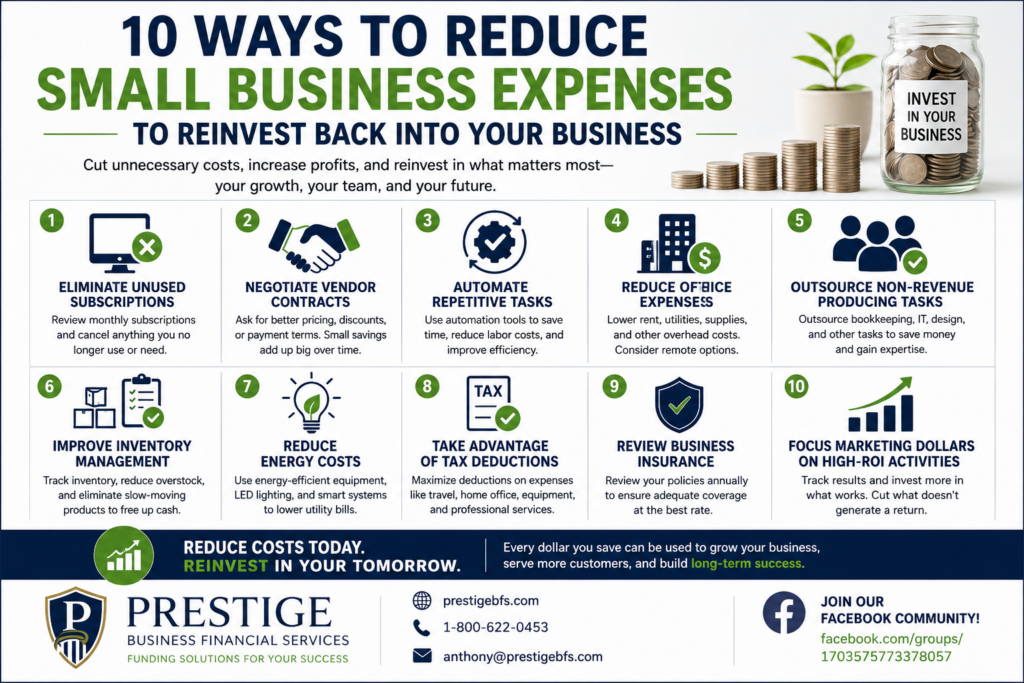
10 Ways to Reduce Small Business Expenses and Reinvest Back Into Your Business

 Smart Cost-Cutting Strategies That Can Help Your Business Grow Faster Every successful small business owner understands one important p...