Life is unpredictable.
Unexpected expenses like:
- Job loss
- Medical bills
- Car repairs
- Business slowdowns
- Economic downturns
can quickly create financial stress for families and small business owners.
That’s why having an emergency fund is one of the smartest financial moves you can make.
But the big question is:
👉 How much should your family actually have saved?
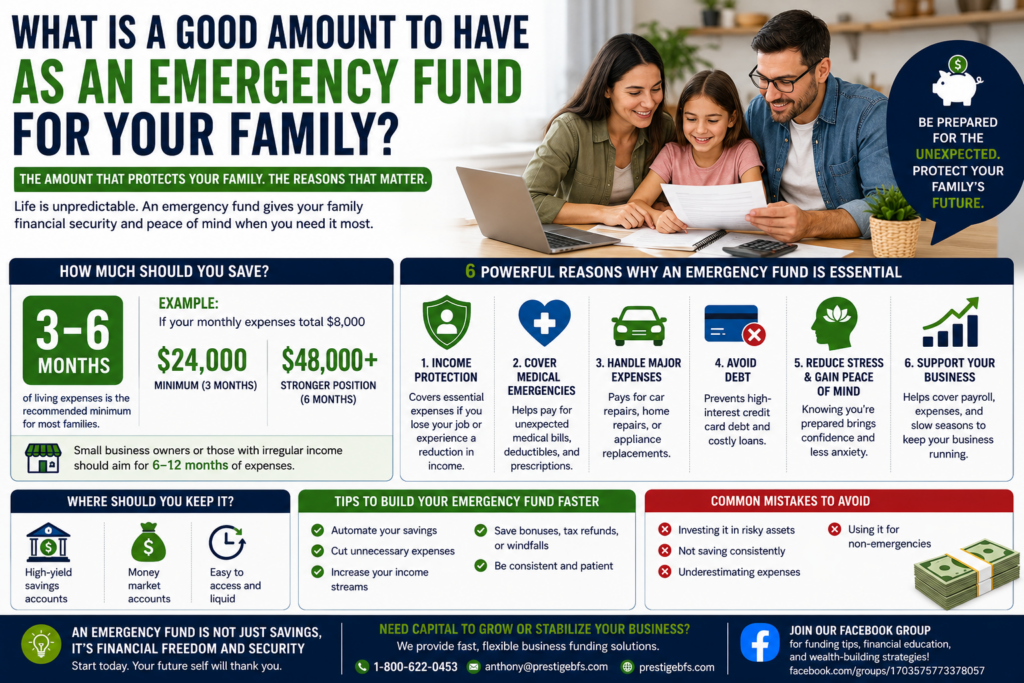
💰 The General Rule: 3–6 Months of Expenses
Financial experts commonly recommend:
✔ Saving 3–6 months of living expenses
Example:
If your family expenses are:
- Mortgage/Rent → $3,000
- Utilities → $500
- Food → $1,200
- Insurance → $800
- Transportation → $700
- Other bills → $1,800
👉 Total monthly expenses:
~$8,000/month
Recommended emergency fund:
- Minimum: ~$24,000
- Stronger position: ~$48,000+
🔥 Why Small Business Owners May Need MORE
Entrepreneurs often face:
✔ Irregular income
✔ Business cash flow fluctuations
✔ Economic uncertainty
👉 Many small business owners should aim closer to:
✅ 6–12 months of expenses
🏡 Reasons Why an Emergency Fund Is So Important
1. ⚠️ Protection Against Job or Income Loss
Unexpected income interruptions happen.
An emergency fund gives your family:
✔ Stability
✔ Time to recover
✔ Less panic during difficult periods
2. 🏥 Medical Emergencies
Healthcare costs can be extremely expensive.
Emergency savings can help cover:
✔ Deductibles
✔ Prescriptions
✔ Unexpected procedures
3. 🚗 Major Unexpected Expenses
Life happens:
- Car repairs
- Home repairs
- Appliance replacements
👉 Emergency savings prevent these situations from turning into debt.
4. 💳 Avoiding High-Interest Credit Card Debt
Without savings, many families rely on:
❌ Credit cards
❌ Personal loans
👉 Emergency funds help you avoid costly interest and financial stress.
5. 📈 Peace of Mind and Reduced Stress
One of the biggest benefits is:
✔ Financial confidence
Knowing you have reserves helps reduce:
- Anxiety
- Stress
- Financial fear
6. 🏢 Business Stability for Entrepreneurs
For small business owners:
Emergency funds can help:
✔ Cover payroll
✔ Handle slow months
✔ Protect operations
👉 Cash reserves are critical for business survival.
🧠 Where Should You Keep Emergency Funds?
Best options:
✔ High-yield savings accounts
✔ Money market accounts
✔ Easily accessible cash reserves
⚠️ Avoid locking emergency funds into:
- Risky investments
- Illiquid assets
- Volatile accounts
🚨 Common Emergency Fund Mistakes
❌ Investing emergency money aggressively
❌ Not saving consistently
❌ Underestimating monthly expenses
❌ Using savings for non-emergencies
💡 How to Build an Emergency Fund Faster
✔ Automate savings
✔ Reduce unnecessary expenses
✔ Increase income streams
✔ Save tax refunds or bonuses
✔ Keep business and personal reserves separate
📊 Example Emergency Fund Goals
| Family Situation | Suggested Emergency Fund |
|---|---|
| Single individual | 3–6 months |
| Family with children | 6–12 months |
| Small business owner | 6–12+ months |
| Variable income household | 9–12 months |
📈 2026 Trending Keywords (SEO Placement)
- how much emergency savings should I have
- emergency fund for families
- emergency fund tips 2026
- financial preparedness strategies
- emergency savings for business owners
💡 Final Thoughts
An emergency fund is not just savings—it’s:
✔ Protection
✔ Stability
✔ Financial peace of mind
👉 In uncertain economic times, having reserves can make all the difference for your family and business.
🚀 Call to Action
If you’re ready to:
✔ Improve your financial stability
✔ Build stronger cash flow
✔ Access funding solutions for your business
👉 Visit: https://prestigebfs.com
📞 Call: 1-800-622-0453
📧 Email: anthony@prestigebfs.com
👉 Join our Facebook Group for funding tips, financial education, and wealth-building strategies:
https://www.facebook.com/groups/1703575773378057
Let’s help you build a stronger financial future 🚀
Hashtags
#EmergencyFund
#FinancialFreedom
#MoneyManagement
#SmallBusinessOwners
#EntrepreneurLife
#WealthBuilding
#PersonalFinance
#CashFlow
#FinancialSecurity
#SavingsGoals